













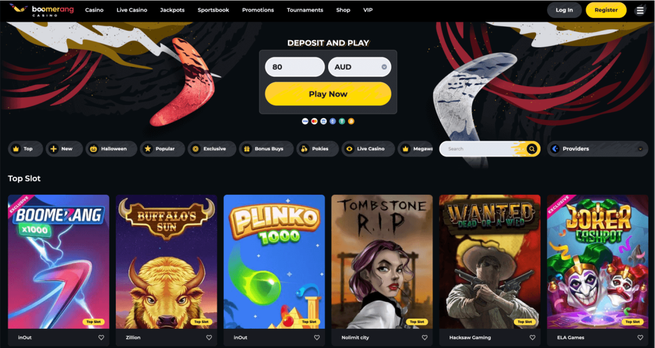
Boomerang Bet Review For Australia Players

This 2026 overview breaks down how Boomerang Bet feels day to day in Australia - from signup to cashouts, limits, and support.

Slot Fortune Gems 2

Table of Contents

  • The Dog House Megaways Slot
  • Lucky Joker 10 Extra Gifts Slot
  • Sword of Ares Slot
  • Floating Dragon Hold & Spin Slot
  • Leprechaun Riches Slot
  • Fruit Coctail Slot
  • The Dog House Megaways Slot
  • Sword of Ares Slot
  • Fruit Million Slot
  • The Dog House Megaways Slot
  • Fruit Box Slot
  • Big Fisherman Slot
  • Seven Books Unlimited Slot
  • Boomerang Bet Fortune Slot
  • Sword of Ares Slot
  • Floating Dragon Hold & Spin Slot
  • 9 Mad Hats Slot
  • Floating Dragon Hold & Spin Slot
  • Big Bass Splash Slot
reviews 1

What Boomerang Bet Reviews Usually Mention In 2026

Most people do not write long essays after a session. They drop quick notes about what actually happened: how fast they got in, whether the lobby felt tidy, and if the payment steps were clear. That is the useful layer to focus on when you are scanning player feedback in 2026.

Imagine you have ten minutes before work and you just want to see what the platform is like. You open it, poke around, and your brain immediately asks two questions: “Do I understand where everything is?” and “Can I leave without creating a mess?” Reviews that answer those questions (even indirectly) tend to be the most honest.

For Australia, it also helps to keep the basics in mind: access should be limited to adult players, and play should be framed around applicable local rules and personal responsibility. You do not need loud legal claims to be cautious - you need clear steps, sensible limits, and a habit of checking what you are doing before money moves.

One more practical tip: do not treat “five stars” as a conclusion. Treat it as a lead. The valuable part is usually one sentence like “cashout was smooth” or “support asked me the same thing twice” - that is where you learn how the day-to-day flow feels.

The Quick First Impression: Lobby, Filters, Search

Picture this: you sit down with a coffee, thinking you will “just browse,” and suddenly twenty minutes are gone because you cannot find the category you wanted. A good lobby reduces that friction with obvious sections, filters that make sense, and a search that does not feel like a guessing game.

Start by doing a simple test most players forget: pick one game type you like (for example, live tables or fast slots), then try to narrow it down twice. First by category, then by a small preference (like volatility feel, feature style, or theme). If the platform keeps you oriented, you will feel it immediately - fewer clicks, less backtracking, less annoyance.

The “Good Enough” Test: Can You Find A Game Fast?

If you are the kind of player who gets bored quickly, speed matters more than perfection. Imagine you are on your phone in a queue and you want one quick round - you do not want to scroll forever. The “good enough” test is simple: can you open, pick, and start within a minute without feeling lost (and without accidentally opening something you did not intend)?

reviews 2

Signup Flow And Account Checks For Adults

Registration is where people either relax or bounce. Not because the form is hard, but because uncertainty feels expensive. You want the process to be predictable: create an account, confirm the basics, and understand what happens next - especially if you plan to deposit or withdraw.

A common real-life scenario: you sign up late at night, then the next day you try to log in and something feels off - a missing confirmation step, a security check, or a request to update details. That is not automatically “bad.” It is often just the platform doing routine controls and age gating, but it should be explained in plain language so you are not guessing.

Keep your own approach practical. Use details that you can keep consistent: the same name format, the same phone number, the same address style. Many account issues come from tiny mismatches, not from anything dramatic. In reviews, you will often see this described as “they asked again” or “it took two tries,” which usually points to inconsistency rather than some hidden rule.

Here is a calm way to handle it in 2026:

  • Set aside five quiet minutes for signup, not thirty rushed seconds.
  • Confirm the contact method you actually use (email or phone).
  • Treat verification like a normal step, not a surprise event.

Imagine you are doing this while chatting with a friend who is also signing up. One of you rushes and types a nickname; the other uses the same details as on their documents. Later, when you both try to cash out, guess whose flow is smoother. Reviews often reflect this difference, even if the writers do not realize it.

Small Details That Save Time During Registration

If you are worried about friction, do a “clean start” first. Close extra tabs, avoid switching devices mid-process, and finish the confirmation step right away. Picture a player who starts on a laptop, then finishes on a phone while commuting - it can work, but it also increases the odds of repeating steps.

Also, set a simple personal rule before you even deposit: decide your session budget and a stopping point. When you see responsible tools like timeouts or self-exclusion options, do not treat them as decoration. Think of them as the seatbelt you hope you never need - but you will be glad it is there when the mood changes.

reviews 3

Deposits, Withdrawals, And Cashout Habits

Payments are where hype dies fast. People can forgive a plain design, but they do not forgive confusion around money. The safest expectation is not “instant everything.” It is “clear steps, clear status, and no mystery about what happens next.”

Imagine you make a small deposit to test the waters, then you try to withdraw a modest amount after a decent session. The platform should guide you through: choose a method, confirm details, pass any routine checks, and track the request status. If any step is unclear, that is where frustration usually starts - and that is what player feedback tends to highlight.

Do not skip the boring part: method matching. Many platforms expect you to withdraw back to a method connected to your account (and sometimes to the same route used for deposits, depending on internal rules and risk controls). If you deposit one way and then try to withdraw another way immediately, you can create delays. Reviews that mention “it asked me to verify again” often come from this pattern.

Below is a practical overview readers usually want. It is intentionally general, because real processing depends on method, bank, and checks - but the flow stays similar.

Payment Step

What You Usually Do

Typical Player Expectation

Common Friction Point

Helpful Habit

Add Funds

Pick a method, enter amount, confirm

Fast confirmation for most methods

Using an account not in your name

Use consistent personal details

Request Cashout

Choose method, confirm destination

Status updates and clear prompts

Missing verification step

Complete checks before requesting

Method Matching

Withdraw via a linked route

Fewer questions, fewer delays

Switching methods too often

Keep one primary method at first

Limits And Controls

Set caps, timeouts, reminders

More control over sessions

Ignoring limits until it is late

Set limits on day one

Support Escalation

Ask about a stuck request

Clear checklist of next steps

Vague replies or repeated questions

Save screenshots of status messages

Reading Boomerang Bet Casino Reviews Like A Pro

When people read feedback, they often look for a verdict. A better approach is to look for patterns: “What do multiple players say about the same step?” and “Does the complaint describe a real process, or just anger after a loss?”

Picture two reviewers. One writes, “Great, I won.” The other writes, “Signup was quick, but I had to redo my phone confirmation, then support answered in two messages.” The second one is more valuable even if it sounds less exciting, because it describes a repeatable experience.

In 2026, another smart filter is timing. Reviews written right after a big win or a big loss tend to be emotional. Reviews written after a week of normal play usually contain the details you can use: navigation, payment clarity, and how the platform behaves when you are tired, distracted, or in a hurry.

Why A Boomerang-Bet Casino Review Can Differ By Player

A review can be “true” and still not apply to you. Imagine a player who only uses desktop and plays long evening sessions. Now compare them to someone who plays short bursts on mobile during breaks. Their verdict on speed, comfort, and even support will be different because their habits stress different parts of the system.

Another common split is the “one-method” player vs the “switcher.” If someone deposits with one method, keeps their details consistent, and withdraws through the same route, their story tends to be smoother. A switcher who tries three methods, changes devices, and rushes verification can trigger extra checks, then writes that everything is “slow.” Neither person is lying - they are describing different behaviors.

If you want to read reviews like a grown-up, ask one question: “What did the player do right before the issue appeared?” That is usually the missing context.

How To Spot Overpromises And Keep Expectations Real

If a review promises perfect speed, perfect bonuses, perfect everything, treat it like marketing, not experience. Imagine someone claiming they never had to confirm anything and every step was instant - that is either a rare smooth run or a story missing details. A believable review includes small inconveniences and how the player handled them.

A Simple “Session Plan” For Your First Week

Try this: first day, browse only. Second day, do a small deposit and play one category. Third day, test a small cashout so you understand the flow before emotions get involved. Picture yourself doing this calmly, like testing a new app, not chasing a mood.

Then build one personal routine: set a session timer, choose a hard stop, and write down what you learned (even two lines). Players who do this rarely end up surprised - and their reviews, if they leave them, are usually the ones you trust.

Mobile Experience: Browser Play, Notifications, And Comfort

Mobile play is not just “does it open.” It is “does it feel stable when life interrupts you.” You might get a call, switch apps, come back, and expect the session to continue without glitches. That is the real mobile test.

Imagine you are on the sofa, one hand holding your phone, the other doing something else, and you want a clean interface. Big buttons, clear balance visibility, and simple navigation matter more than fancy visuals. If you are constantly zooming or mis-tapping, that is where irritation builds.

In 2026, many players also care about quiet controls: notification settings, quick access to limits, and a smooth login flow that does not reset every time you blink. The ideal experience is boring in the best way - it works, it stays out of your way, and it lets you leave the session without drama.

The Pocket Check: Battery, Data, And One-Hand Use

Think of a typical day: you are on mobile data, battery is not full, and you have five minutes. A sensible habit is to lower risk in these moments - smaller stakes, shorter sessions, fewer rapid-fire games. Mobile convenience is great, but it also makes “autopilot play” easier, so build friction on purpose: set a timer, take a breath, and stop when you said you would.

Support, Responsible Tools, And Community Feedback

Support is often judged unfairly. People message when they are already stressed, then expect a miracle. A better way is to treat support like a checklist partner: you provide clear details, they provide next steps. If you send one neat message with the issue, your device type, and what you already tried, you usually get a cleaner response.

Imagine you request help and write, “It does not work.” Now imagine you write, “Login code does not arrive, I tried resend twice, checked spam, and restarted my phone.” Which one gets better help? Reviews that say “support was useless” sometimes reveal more about the message than about the agent.

Responsible tools matter here too. In 2026, adult players expect features like cooling-off timeouts, limits, and self-exclusion options to be easy to find and easy to activate. The platform should not hide these tools behind confusing menus. If you ever feel your play is slipping into “one more spin” mode, that is your cue to use the tools, not to argue with yourself.

Finally, community feedback is most useful when it is specific. Look for comments about clarity: “I understood what to do,” “status updates were clear,” “I could track my request,” “limits were easy to set.” Those points translate into real confidence, especially when you are playing from Australia and want your experience to stay predictable, adult-focused, and within applicable rules.

FAQ

Start with the basics: confirm your account details are consistent, decide a small test amount, and set a session budget and time limit before you add funds. Imagine you are paying for a trial run, not committing to a routine - the goal is to learn the payment flow and how the cashier screens look. If anything feels unclear, pause and read the prompts carefully rather than clicking through fast, because most mistakes happen in a hurry.

Keep it simple for your first cashout: use one primary payment method, avoid switching devices mid-request, and complete any routine account checks early. Picture a player who waits until after a win to handle verification - that often creates extra steps at the worst moment. If you prepare first, the process usually feels calmer and easier to track.

Pick limits that match real life, not a fantasy version of you. Set a deposit cap, a session timer, and a cooling-off option you will actually respect when you are excited or annoyed. Imagine you are building a guardrail for a day when your judgment is weaker - that is the whole point. Revisit limits after a week and adjust based on what you learned.

Trust the reviews that describe actions and steps, not emotions and slogans. If someone explains what they did, what screen they saw, and how the platform responded, that is useful even if the tone is negative. Imagine reading it like a recipe: clear inputs, clear outcome. One-line praise or rage might be honest, but it rarely helps you predict your own experience.

First, rule out the boring stuff: check your connection, try switching between Wi-Fi and mobile data, restart the app or browser, and confirm your time and date settings are correct. Imagine you are troubleshooting a messaging app - the steps are similar. If the issue persists, contact support with a clear summary of what you tried and what exactly happens on screen.

Build a short routine: decide your stop point before you start, use a timer, and take a short break after any big swing (win or loss). Imagine you are driving in heavy traffic - you do not speed up just because you feel tense. If you notice you are chasing, that is the signal to pause, use a timeout tool, and come back only if you still feel in control.

Contact support when you have a specific issue you cannot resolve in a few minutes, especially around account access or payment status. Write one message with the problem, your device type, and the steps you already tried, and include any relevant status text you see. Imagine you are handing someone a neat note instead of a messy story - the clearer you are, the faster the response usually becomes.